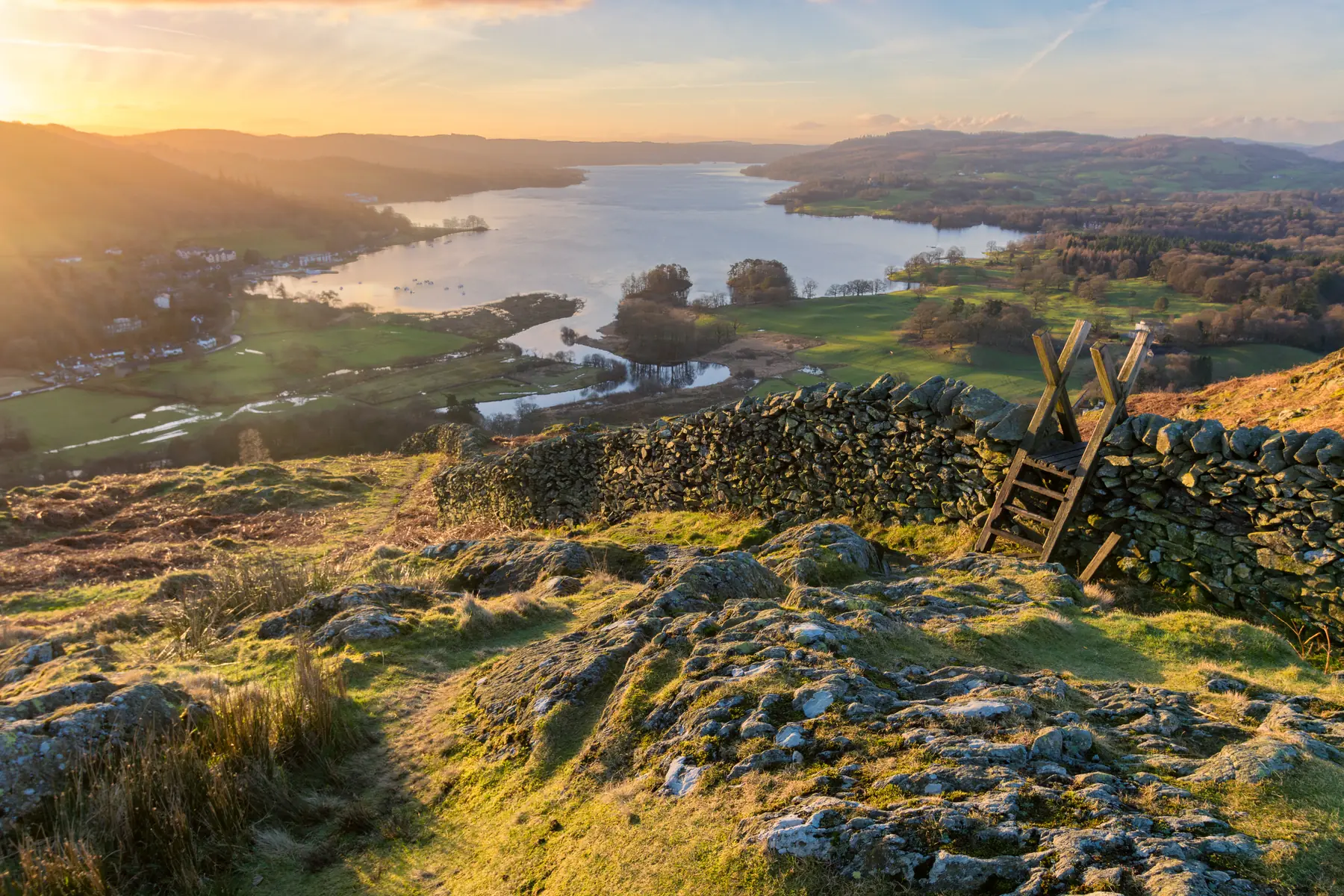
The Lake District has quietly become one of the best places to eat in Britain, and Windermere is at the centre of it. Within a few kilometres of the lake there are kitchens with national reputations, several of them in country house hotels above the water, alongside the full range of walkers’ pubs, tearooms and chip shops that a resort of this age accumulates.
The geography is two towns. Windermere on the hill has the station, the everyday restaurants and the guesthouses. Bowness a mile below has the lake, the tourist trade and most of the pubs. And the country hotels are scattered on the roads out.
Windermere and the surrounding lanes carry an unusual concentration of ambitious kitchens for a small Lakeland town — country house hotels above the lake, restaurants with rooms in converted Victorian villas, and several places that have held national recognition for years.
They are expensive, they book out weeks ahead in season, and they are the reason a certain kind of visitor comes to Windermere rather than to Keswick. If you are planning a special dinner here, book it before you book anything else.
Holbeck Ghyll, Gilpin and the hotels along the Ambleside road are the names to look for, and there are more in Cartmel, half an hour south, which has become a destination in its own right.
Holbeck Ghyll sits on Holbeck Lane, a country house above the lake looking west to the fells; it is a dinner you dress for, and the dining room is the point of the stay as much as the bedrooms. Gilpin is on Crook Road, out towards the Kendal side rather than on the water — a hotel with serious kitchens, and a different atmosphere from the lakeside pubs. Neither is a walk-in. Saturday in season is booked out well before you arrive at the station.
The lakeside village has the volume: pubs on the front, Italian and Indian restaurants in the lanes, ice cream and fish and chips along the promenade, and a good deal of catering to day trippers.
It is uneven, and the rule is the usual one — the places directly on the water charge for the view, and the better cooking is a street or two back.
The Angel Inn and the older pubs above the bay are the pleasant end, and there are cafés with terraces looking over the lake.
The front around the piers is chips, ice cream and a view you pay for in the bill. Helm Road, where the Angel Inn sits, is above the bay rather than on the promenade — a pub with a garden looking over the water, and a table that is not aimed at the next coach. On a wet August Saturday the difference between eating on the pier and eating two streets back is twenty minutes and a quieter room. The Angel fills early in the evening in season; book the garden or the dining room rather than hoping for a terrace seat at seven.
Quieter, more everyday, and better value. The streets around Crescent Road and Main Road have the restaurants that residents use — bistros, Italian, Indian, Thai — plus bakeries and cafés serving the walking trade.
Homeground and the coffee places near the station have a following out of proportion to the town’s size.
Homeground is on Main Road, on the station side of town: a coffee-and-kitchen room that walking parties and train arrivals share. It does not take bookings, it queues at eleven, and the kitchen is a daytime one — brunch and lunch, not an evening restaurant. Crescent Road and Main Road are the streets to wander when Bowness is packed. You will get a table, and you will be eating with people who live here.
Staveley, seven kilometres east on the Kendal road, is the food village: More? The Artisan Bakery is a genuine destination — people drive from Manchester for the bread — and Hawkshead Brewery’s beer hall is next to it. The Wilf’s café serves the cyclists coming off the Kentmere lanes.
Staveley Mill Yard is the cluster: the bakery, the beer hall and Wilf’s sit together, so a wet afternoon can be bread, a pint and a bowl of something without moving the car. Weekend mornings the bakery queue is the event. The Watermill at Ings is on the A591 between Windermere and Staveley — a brewery pub, busy with walkers at lunch, and a useful stop if you do not want to go as far as the Mill Yard. The Mortal Man at Troutbeck is the valley inn: a room with a fire, a view up the dale, and the place you come down to from Garburn or the Tongue. It packs out after a fine day on the fells; midweek and out of season you can walk in.
Ambleside, seven kilometres north, has more restaurants than Windermere and is an easy evening out — the 555 bus runs late.
Grasmere, half an hour north, has the gingerbread shop, which is a genuine institution: made to a recipe of 1854 in a tiny building beside the churchyard, sold by the piece, and nothing like a biscuit or a cake.
Hawkshead across the ferry, Cartmel to the south — home of sticky toffee pudding as a commercial product — and Kendal to the east all repay a trip.
Herdwick lamb from the fell-bred sheep that graze the surrounding hills, and which the Lake District’s designation as a World Heritage Site is partly about. Cumberland sausage, coiled and sold by length. Damsons from the Lyth valley just south, in season in September. Kendal Mint Cake, which is a confection rather than a cake and which went up Everest with Hillary and Tenzing. Grasmere gingerbread. Sticky toffee pudding, invented — or at least perfected — in the Lakes. And Arctic charr from the lake itself when it is available, potted, which is a dish going back centuries.
Windermere and Bowness have plenty, and the surrounding villages have better ones. The Watermill at Ings, the Hawkshead Brewery beer hall at Staveley, the Mortal Man at Troutbeck and the pubs of Ambleside and Hawkshead are all within twenty minutes.
Cumbrian brewing is strong and getting stronger, and most pubs here carry several local beers.
Booking. The Lakes fill from Easter to October, at half terms and over Christmas and New Year. The serious restaurants book weeks ahead; the pubs need a table reserved on summer evenings.
Timing. Kitchens close earlier than city visitors expect. Coming off a fell at nine in June and expecting dinner is optimistic.
Walkers. Boots and waterproofs are unremarkable at lunchtime anywhere here. The country house restaurants appreciate a change of clothes in the evening.
Self-catering. A large share of Lake District visitors do, and the shops are stocked for it. Staveley’s bakery and the farm shops around Kendal are considerably better than the supermarkets.
Two categories worth separating. After a walk, the pubs at Troutbeck, Ings, Staveley and Ambleside are the places that will not mind boots and will serve substantial food at an awkward hour — and the timing warning applies as everywhere in the Lakes: kitchens close earlier than city visitors expect.
On the water, the cafés at Brockhole, the Jetty Museum and Fell Foot all have lake views, and the boats themselves serve refreshments on the longer cruises. Eating on a terrace above Windermere on a summer evening is one of the things people come here for, and it is worth booking for.
Windermere and Bowness are the most visited part of the Lake District, and the food economy reflects it. Easter to October is busy; half terms, bank holidays and the period between Christmas and New Year are very busy indeed.
Booking matters more here than in most of the Lakes, particularly for the country house restaurants, which take reservations weeks ahead.
Out of season the towns stay open — unlike smaller Lakeland villages — and a wet November weekend in Windermere is cheap, quiet and surprisingly pleasant.
The country house hotels on the roads above the lake carry the national reputations, and they book weeks ahead. Ambleside and Cartmel have more choice.
Windermere town rather than Bowness, and the villages — Staveley, Troutbeck, Ings and Hawkshead.
A cross between a biscuit and a cake, made to an 1854 recipe in a tiny shop by the churchyard at Grasmere, half an hour north. Worth the trip.
At the top end, yes — this is where the Lake District’s most ambitious kitchens are. The pubs and the town restaurants are ordinary Lakeland prices.
In season, for anything good, yes — and weeks ahead for the country house restaurants.